I have spent years proving that price does not guide the customer when choosing where to go or even when deciding to complete a purchase. Retail still insists on believing that price is the main driver of choice when psychology shows exactly the opposite. Customers do not choose by the number on the tag. They choose by how right the decision feels by the clarity of the journey and by the absence of cognitive barriers. Their decision does not begin with the number but with the value they believe they are receiving. Much of this process happens unconsciously which means it does not appear clearly in opinion surveys. Relying only on the subjective perception of the sales team can also lead to strategic mistakes.
That is why in my book The Consumer Is in a Hurry, I wrote that “the challenge of making the consumer pay more is helping them see value. Treating price as a tool to attract customers is a monumental mistake for any business” (p. 34). This statement is still accurate and relevant. The customer does not move because of a few cents. They move because their mind interprets the experience as emotionally advantageous. People buy where everything feels easier lighter and more aligned with their own rhythm. That is why clean organized and visually quiet environments deliver better results than any price reduction.
But how can a restaurant a snack bar a convenience store a fueling area or even a drive thru be quiet? When we talk about visual pollution we also talk about unnecessary noises that can be removed. The sound of chairs scraping can be eliminated with proper supports. Fuel pumps can use technologies that are already available in Brazil and widely used in the United States that remove the pump motor and silence the fueling process entirely.

Recently I stopped for coffee at a Kopenhagen store and the experience was interrupted every fifteen minutes by a loud ice cream machine that filled the entire store with noise for another fifteen minutes. It was unbearable. There were no people talking. Only the deafening sound of the machine breaking the peaceful atmosphere of the café. Later I discovered that ice cream was one of the highest margin products and that quieter machines existed but were more expensive. I never returned to that store and I ask you this. Was the retailer’s savings worth it?
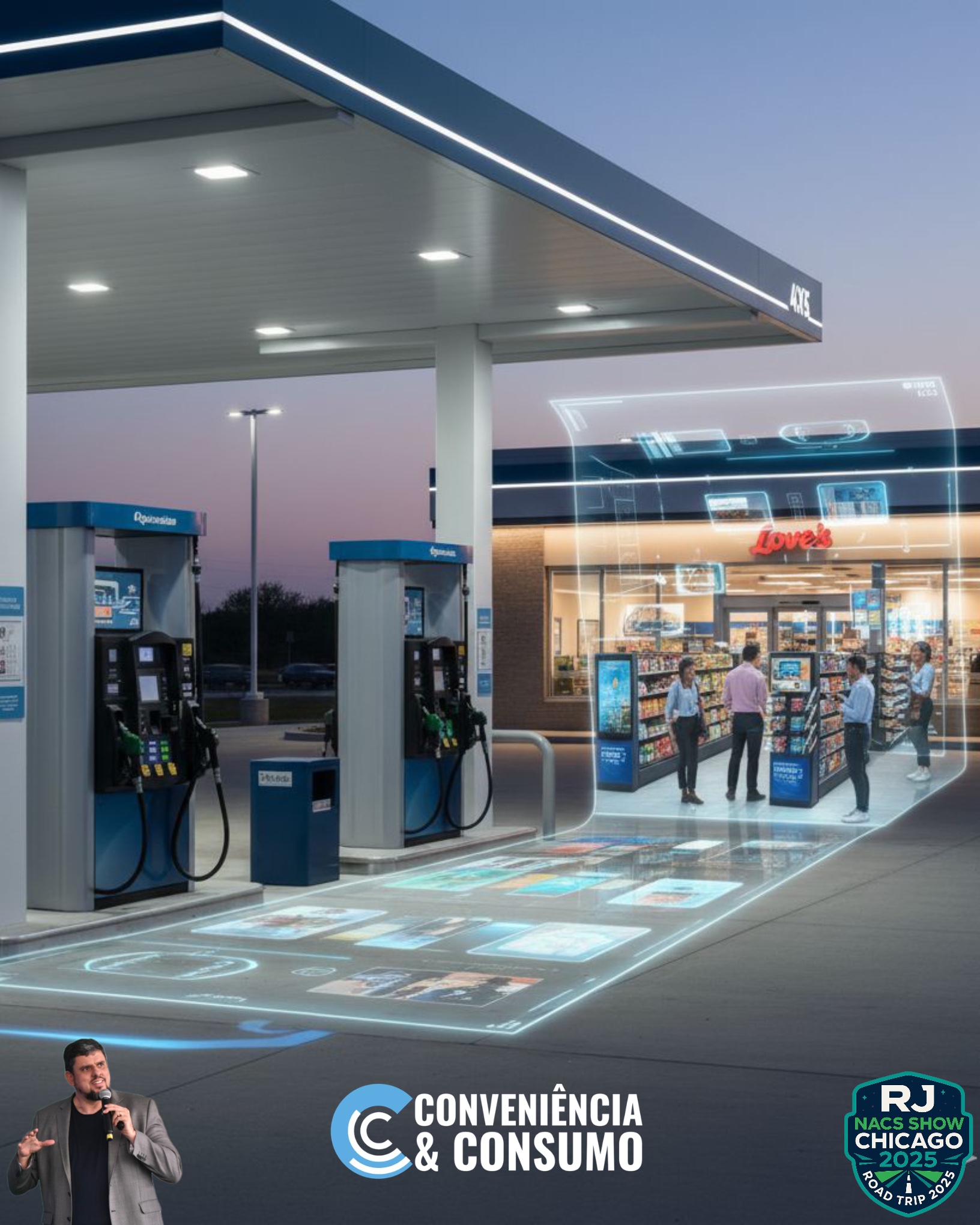
What we saw during our technical visits to Love’s and QuikTrip confirmed that experience is a technology far more powerful than any individual piece of equipment. At Love’s everything works like gears of the same watch. Uniform lighting wide aisles modular shelves and the seamless integration of the app with the physical environment create a silent intuitive operation. Customers walk in and instantly understand where everything is. There are no doubts no confusion and no friction. This type of cognitive architecture reduces mental effort and increases the feeling of control which creates emotional comfort and naturally increases sales.
At QuikTrip the perception is even more impressive. The store seems to have been designed from the customer’s point of view in motion. The layout does not decorate the space. It guides decisions. The entrance naturally leads customers to the hot food stations while the beverage area offers variety without visual chaos. Nothing is accidental. As I wrote in my book Living American Retail “the consumer does not want complications. They want clarity. When everything feels simple they feel in control” (p. 94). That clarity only exists when design reduces interference removes unnecessary distractions and directs attention to what truly matters. QuikTrip does not just sell products. It sells flow and flow is emotional technology in practice.
Another key point in both networks is the integration between experience operation and behavior. There is no separation between what the customer sees and what the team executes. The operation was designed to stay invisible. Disruptions are eliminated before they appear whether through quieter machines restocking processes that happen out of the customer’s sight or signage that is minimal and purely functional. Nothing screams for attention. Nothing competes. This design allows the customer to move through the store with a calm mind unaffected by cognitive interruptions. When the journey is calm the decision becomes natural. The customer feels without being able to explain that it is worth being there. They sense they are saving time. And when retail makes the customer feel they gained time they return again and again.

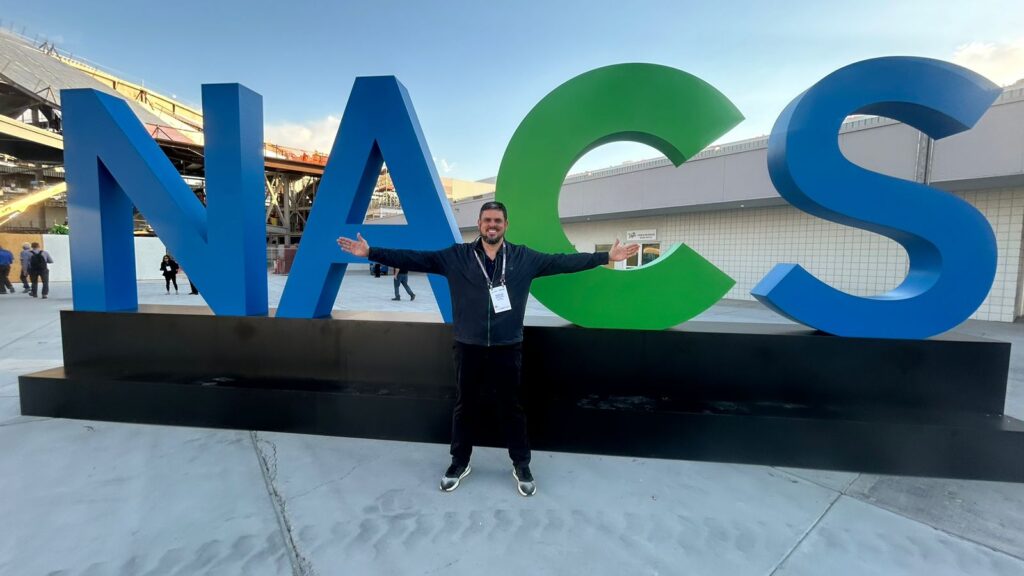
All these discussions about experience flow and service design meet their highest expression at the NACS Show Chicago the largest convenience and fueling retail event in the world. This is where global retail reveals the future. This is where major networks present solutions that are not only technological but behavioral. In 2025 only sixty one Brazilians attended the event. This shows how far we still are from the speed and maturity of the international operations we studied throughout the RJ Road Trip.
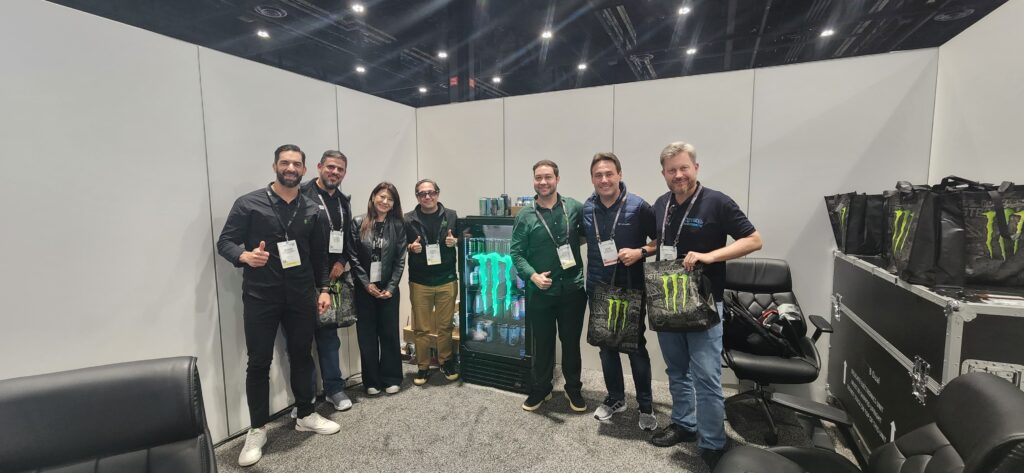
This is why the participation of the Errejota Group made history. For the first time a Brazilian group traveled the United States before the NACS visiting store after store and walking into the show already knowing what to observe what to ask and what to compare. We were not retail tourists. We were field researchers. And that changes everything. We returned with an understanding that no virtual report or recorded lecture could ever deliver.
Two points from the NACS are essential for the Brazilian retailer. The first is the clear understanding that experience is a form of technology. American networks treat lighting flow silent operations physical and digital integration and cognitive design with the same seriousness as fuel logistics. The second is the central role of data. In the United States every step of the customer journey is measured. Each movement reveals patterns that turn into sales strategies. Anyone who ignores these two pillars will fall behind.
The Brazilian retailer needs to be at NACS 2026 and must arrive prepared. The show is not a trip. It is an immersion. And that is exactly what the Errejota Group delivers. Preparation curation practical interpretation guided technical visits and a benchmarking journey that begins months before the show and continues long after when we apply everything learned to the Brazilian market. Those who joined the 2025 edition returned different more attentive more strategic and more competitive.
The future of convenience retail will not be built by those who wait. It will be built by those who see first. And seeing first requires being in the right place. NACS is that place. The Errejota Group is that path. If you want to take the next step the time is now.